

After being eliminated in the CBA quarterfinals, the Shandong men’s basketball team had barely a month of rest before the front office decided to regroup in early June—almost immediately after the Finals ended. The team’s deep-rooted issues remain unresolved, and now head coach Qiu Biao must navigate a crucial offseason with the broadest authority ever granted to a local coach in Shandong’s history. He signed a five-year contract with a clear mission: rebuild the team within three to five years. But the cards in his hand are far from promising.
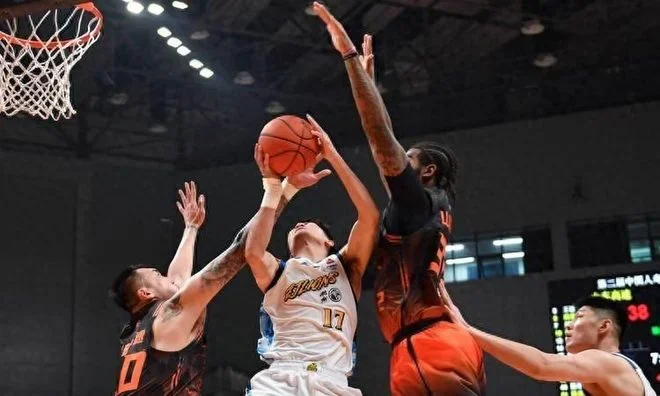
Many fans were left frustrated after the team’s decisive Game 2 loss to Shanghai, where the performance of the foreign players was particularly alarming. Shandong lost 68-96 in a must-win game. Among the four imports, only Johnson managed a modest 15 points; the other three—Persell, Jones, and Chris—combined for just 3 points. Their total output was less than Shanghai’s big import, Lofoten, scored alone.
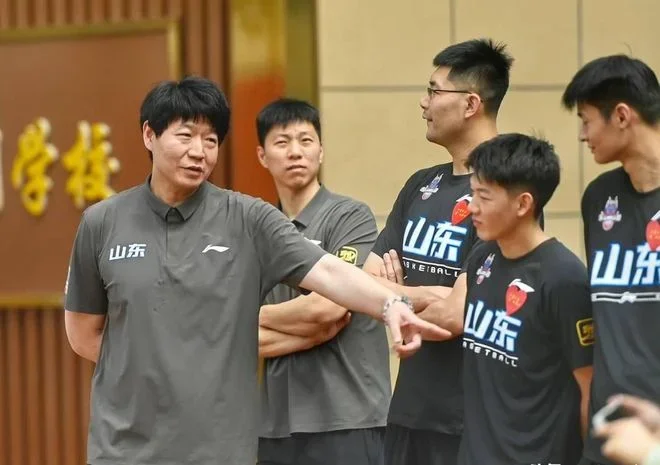
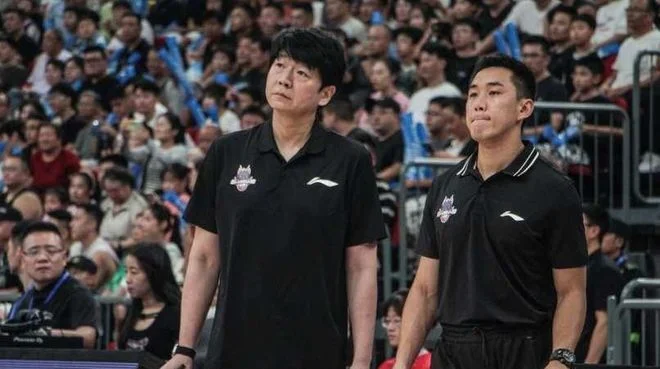
Qiu Biao, known for his calm demeanor, lost his temper after the game, telling the media, “Some players are not even professional basketball players.” The disappointment was palpable. The team had hoped to rely on its foreign players to make a playoff push, but these high-paid imports lacked basic professionalism and treated the postseason like a casual affair.
This season, Shandong cycled through six foreign players, none of whom could shoulder the core responsibility. Over the past two years, the team has used more than ten imports, preventing the development of any stable tactical system and hindering chemistry with local players.
Each import came with its own flaws. Chris averaged 19.7 points in the regular season but had poor emotional control, often picking up technical fouls and clashing with referees. Persell was wildly inconsistent—occasionally shining in regular season games but scoring zero in back-to-back playoff contests. Johnson was effective driving to the basket but lacked a reliable outside shot, making it easy for opponents to pack the paint. Jones never integrated into the team’s system, contributing almost nothing on either end of the floor.
Young local players also failed to step up. Xie Zhijie and Wang Zheng showed promise during the regular season, with Wang even scoring 11 points in just over three minutes against Ningbo, hitting three of four three-pointers. But in the high-pressure playoffs, they lost their composure. Xie Zhijie recorded zeros across all major stats against Shanghai, hesitating on offense and missing assignments defensively. Wang, despite his earlier flash, struggled against Shanghai’s intense defense and rarely got meaningful minutes. Qiu Biao acknowledged Wang’s talent but said he needs time to develop—time Shandong cannot afford.
The rotation remained heavily reliant on veteran starters all season, leaving young players with scant on-court experience and little tailored training. Their development has stagnated.
Beyond the imports and youngsters, Qiu Biao must also manage the futures of veterans Tao Hanlin and Chen Linjian. Tao, a team legend at age 35, still performs at a high level—he once scored 22 points in a single game during the National Games. But his role has diminished to that of a blue-collar rebounder and screener, with few offensive opportunities. His contract expires this summer; losing him would leave the frontcourt barren, as no young player is ready to fill his shoes. Retaining Tao is essential, but redefining his tactical role is equally critical.
Chen Linjian, acquired last season as the marquee domestic signing to shore up perimeter shooting, was a two-time CBA All-Star three-point champion while at Fujian, averaging 15.6 points and 4.8 rebounds in 2022-23. However, a major injury limited him to just 10 games over two seasons, and since joining Shandong, he has faced constant skepticism. Despite decent per-game stats, he never received enough touches to fully utilize his shooting ability. Qiu Biao admitted that Chen’s physical condition is fine and that previous tactical deployment failed to maximize his impact.
Although reaching the quarterfinals might seem to secure Qiu’s position, underlying issues remain. The team’s performance was erratic—sitting among the top four mid-season, then dropping to eighth after a five-game losing streak, culminating in a playoff exit against Shanghai. Qiu’s tactical adjustments and in-game decisions have been questioned. After a loss to Shenzhen, he took responsibility, pointing to defensive lapses and turnovers. But responsibility alone isn’t enough; solving practical problems is key.
Next season, the CBA will revert to a three-import policy while tightening roster registration and limiting import swap frequency. This drastically reduces Shandong’s margin for error in recruitment. Qiu must not only find imports who fit the system and have the right attitude but also develop young players, re-energize veterans, manage internal pressures, and handle roster politics. This season, under pressure from management, he was forced to bench players he had favored, adding to the complexity of his job.
Shandong’s problems are multifaceted: a focus on quantity over quality in import selection, lack of structured youth development, and misaligned roles for core players. These issues have kept the team stuck at the quarterfinal ceiling.
With less than a month before the early-June training camp, time is scarce. Qiu must negotiate Tao Hanlin’s contract, scout new imports, design specialized training for young players, and redistribute touches for Chen Linjian. Every decision is urgent.
Many once believed that simply upgrading imports would vault the team forward, but the real issues are deeper. Professional sports offer no shortcuts, and rebuilding takes patience. Qiu Biao now holds full authority, and every choice he makes will shape the future of Shandong basketball. Whether he can seize this offseason opportunity to break the deadlock will determine not only his job security but also the team’s revival prospects.
*Source: CCTV Sports analysis of CBA offseason movements*
